
GDC Releases Versus Charlton Jail
The Georgia Department of Corrections runs the state prison system and its statewide offender search. It does not run Charlton County Jail as a state prison. GDC lists the local jail as a county facility, but the sheriff controls local booking and release records. A person who bonded out, received time served, or left under a local court order should be confirmed with the Charlton sheriff and court. Searching GDC for that county-only event may return nothing.
The state search becomes relevant after a court commits a person to GDC. Charlton County Jail can record the handoff as a transfer or release to another authority. That local entry means the sheriff stopped holding the person. GDC may later show the receiving prison, offense, sentence information, and a release-related field. Readers must keep those two events separate. A transfer date is not proof that the person walked into the community.
After an actual prison release, the public GDC record may retain release information. If parole began, the Georgia Parolee Search and DCS can add the post-release supervision layer. If the full sentence discharged and the public search is thin, a formal GDC request and the court sentence are stronger records.
Search Georgia State Release Records
The official GDC Find an Offender page says a search can use description, name, ID, or case number. The direct form is the working query page. Use the most specific input available and inspect all returned details. Common names can produce more than one record, and a photograph alone is not enough to establish a match.
- Open the GDC offender query form and review its terms.
- Search by GDC ID or case number when known. Otherwise use the full name and available description fields.
- Open the likely record and compare identifying details, offense or case information, and facility.
- Read the custody and release fields in context. A future date is not an actual release record.
- For parole timing, move to the Board's TPM lookup. For an already released parolee, use the parolee search.
- If the public record is incomplete, request the sentence or release record from GDC.
The successful manifest capture below comes from the official GDC search entry.
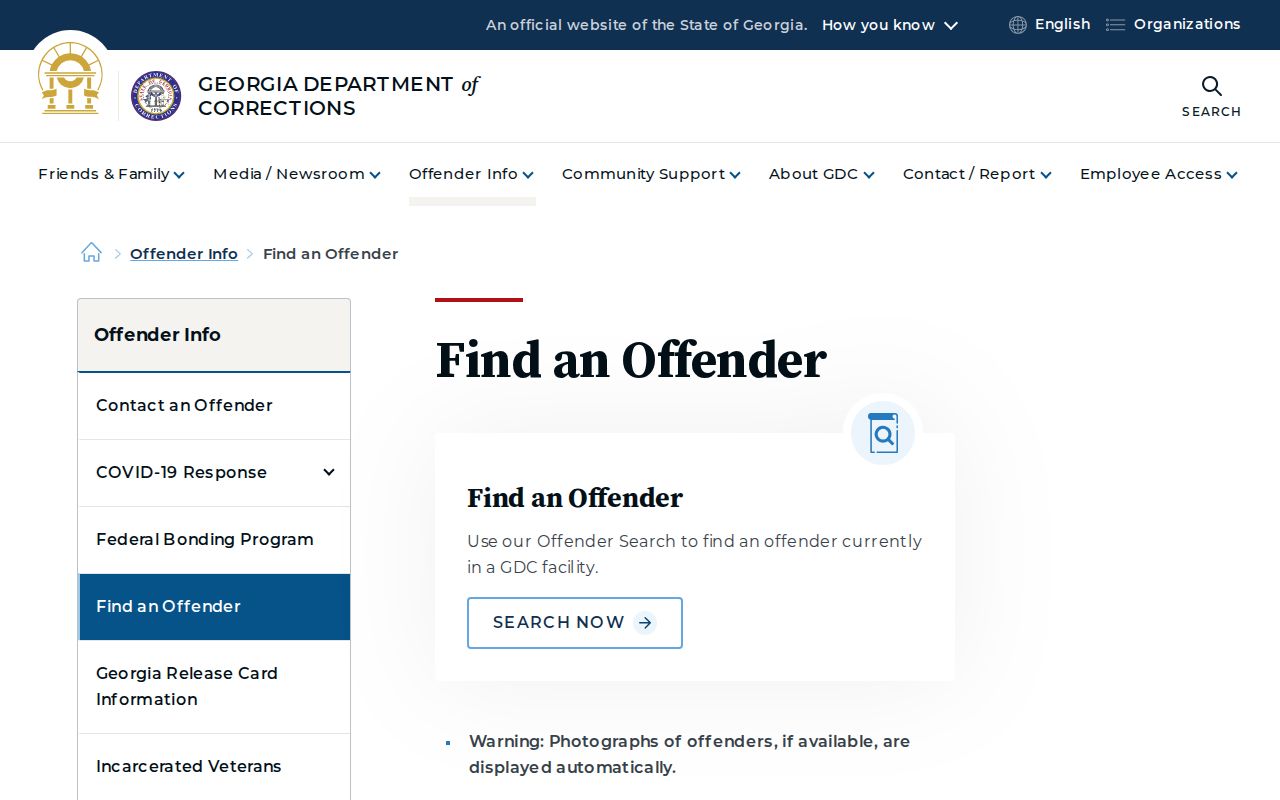
It confirms the statewide search route while leaving Charlton County Jail releases with the sheriff's local records system.
GDC Release Search Fields
GDC states that the public tool can locate charges, facility location, and release date information. It also warns that offender photographs display automatically when available. The exact fields can vary by record. Treat each as one part of an identity and custody check rather than reading a single line in isolation.
| Field | How it helps | Key limit |
|---|---|---|
| Name and description | Helps distinguish matching people | Similar names and traits can overlap |
| GDC identifier | Connects the result to the state record | Not a Charlton booking number |
| Case or offense | Links custody to a sentence | Does not replace the court order |
| Facility location | Shows a current or recorded state placement | May change after transfer |
| Release information | Supports state-prison timing or past release | Projected and actual dates differ |
| Photograph | Assists identity matching when available | Does not prove current custody or case outcome |
Still-in-custody and released records answer different questions. A facility location points toward present state custody, subject to update lag. A released or dated result concerns a past GDC custody exit. Neither result proves the status of a separate county, federal, or immigration hold.
Note: GDC search fields describe state corrections records, not every arrest or release that occurs in Charlton County.
Georgia Maximum Release and TPM
A Maximum Release Date is the GDC sentence endpoint apart from parole decisions. Georgia Rule 125-2-4 defines it as the date an inmate would leave Department custody after serving the full sentence, and it provides no maximum release date for life or death sentences. This field should not be called a guaranteed release appointment.
The State Board of Pardons and Paroles uses a different term, Tentative Parole Month. A TPM marks when the Board expects to complete final review and may set a parole release date. It is not a final decision. Conduct, required programs, new case information, or Board action can alter timing. The maximum date belongs to the prison sentence framework; the TPM belongs to parole review.
GDC's Performance Incentive Credit program may also affect eligible state timing. The agency says an offender can earn up to twelve points and may receive one to twelve months off a TPM or Maximum Release Date. Case-plan work, education, vocational progress, and work assignments can support points. PIC does not guarantee parole and does not apply Charlton County's local jail earned-time rule to a state sentence.
GDC Records and Contact
The public search is the fastest state-prison check, but it is not the full corrections file. For a documented release or discharge, ask GDC for the existing record by name, GDC ID, case number, and approximate custody dates. A focused request can seek the sentence record, release date, discharge status, and facility history. The sentencing court remains the source for the filed order that created or changed the term.
Do not route a recent Charlton County bond release to GDC. Call the sheriff at 912-496-7321 and request the local booking and release entry. Conversely, the sheriff cannot issue a GDC discharge record merely because the state sentence began with a Charlton arrest. The record owner follows the custody authority.
For exact public-record proof, ask for a current copy or agency response rather than relying on a saved screen. The Charlton County released inmate search explains how the state result fits with county, court, parole, VINE, BOP, and ICE channels.
After a GDC Release
A state-prison release can lead to parole, another supervision form, a detainer transfer, or complete discharge. The public offender record may show the prison exit, while the parolee search shows an already released person on parole. DCS supervises parolees and felony probationers in the community, and its Waycross Field Office serves Charlton County. A DCS record does not mean the person remains incarcerated.
If a detainer caused transfer, the GDC exit is real but the person may still be held elsewhere. Check the requesting county, BOP, USMS, or ICE system as appropriate. Georgia VINE can provide custody-change alerts where an active data feed is available, but it is not GDC's permanent sentence archive. Court records help explain resentencing, credit, revocation, or orders that changed the state term.
Full discharge should be verified with the final state or court record. A name disappearing from a current facility view is not enough. Record the GDC ID, the displayed release date, any parole link, and the date the search was checked. Then confirm the legal status with the agency that owns it.
Correct a GDC Release Record
A date dispute should be traced to the input that controls it. The Charlton sentencing court owns the filed sentence, amended orders, and awarded jail credit. GDC applies the state custody calculation and maintains its offender record. The Parole Board controls TPM and parole decisions. Sending the same general question to all three can produce partial answers without identifying the source of the conflict.
Start with copies of the displayed GDC result and the court order. Mark the GDC ID, case number, date viewed, and field believed to be wrong. Ask the responsible office to compare the existing record with the controlling order. If the question concerns pretrial time spent in Charlton County Jail, the sheriff's custody dates and the court's credit language may both be needed.
A corrected public display can lag the underlying agency action. Request a written response or current record when the exact release calculation matters. Do not treat an older screenshot as controlling after a court, GDC, or Board update. The formal source document carries more weight than a cached search result.
GDC Photos and Identity Checks
GDC says an offender photograph displays automatically when available. The image can help distinguish records, but it should be compared with the state identifier, case, offense, and description. A prison photograph is not proof that the person was booked into Charlton County Jail, and an older image does not establish present custody.
If no photograph appears, continue with the other identity fields. Do not substitute a commercial image for the official record. A release date and matching GDC identifier provide stronger state-custody evidence than appearance alone. Court records can then confirm the sentence tied to the person.