
Charlton Projected Versus Actual Release
A projected or scheduled date is a calculation based on the records in force at that point. An actual release date records when custody ended. Those dates can differ. New court credit, a corrected sentence, a detainer, discipline, a program credit, or a parole decision can change the expected date before release staff complete the exit. For Charlton County Jail, bond and court-order releases are not sentence-expiration calculations at all. A person may leave when the court and jail process the required order.
Pretrial detention is the clearest limit. A person held before trial does not have a sentence end date to subtract from. Bond can be set, changed, denied, or satisfied, and another warrant or hold may prevent release even when the local case permits it. The Charlton sheriff's custody entry and the relevant court order are the primary sources. A sentenced county inmate does have a term, but earned time and credit must be applied by the lawful custodian.
- Maximum Release Date
- The GDC date based on serving the full sentence, apart from parole decisions.
- TPM
- A Tentative Parole Month when the Board plans final review, not a guaranteed exit month.
- Earned time
- A lawful county sentence allowance based on eligible conduct under the local jail statute.
- Detainer
- A request or hold from another authority that may keep custody in place or cause transfer.
Find a Charlton Release Date
Start by separating Charlton County Jail custody from Georgia Department of Corrections custody. The sheriff's jail is for local detention and county confinement. GDC operates the state prison system. A transfer out of the county jail can be recorded as a local release even though the person remains confined after GDC pickup. Federal and immigration custody use still other systems and should not be read through a county or GDC release field.
- Confirm the holding system. Call Charlton County Jail for a local detainee, or use the official GDC search for a state prisoner.
- For a pretrial person, check the court docket for bond, warrant, and release orders. Do not expect a sentence-based projected date.
- For a county sentence, ask the jail for the sentence-expiration calculation, jail credit, earned-time treatment, and any active hold.
- For state prison, open the GDC Find an Offender page, search by name, description, ID, or case number, and review the matching record.
- Check the Board's TPM information only for parole timing, then verify any final release action with the controlling agency.
The GDC record may show charges, facility location, and release date information. Match more than a name when possible. A GDC absence does not prove a Charlton County Jail release, especially when the person only faced a recent local arrest. The complete named-person release path is also explained on the Charlton County released inmates home page.
The successful manifest capture below comes from the official GDC friends-and-family release-date source.
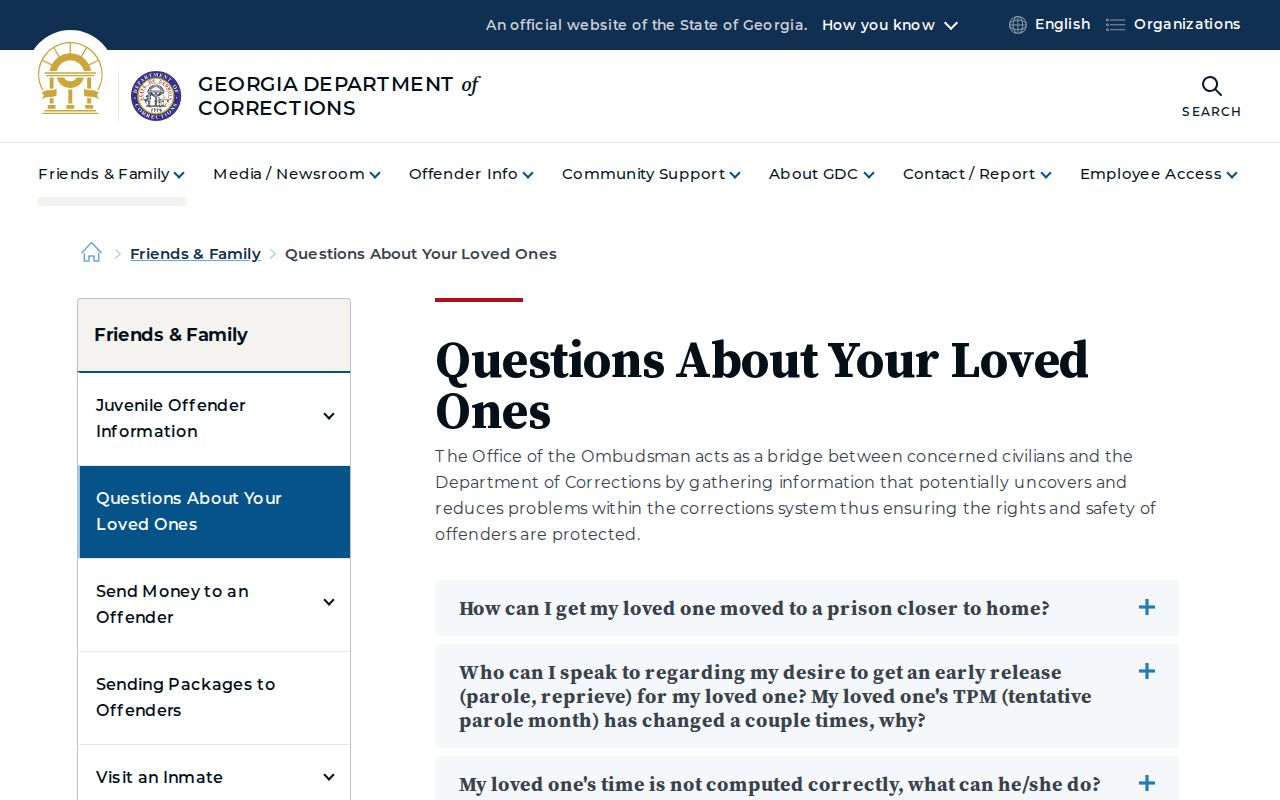
That GDC source supports using the offender search for state-prison release information, not for a person who only left the Charlton County Jail.
Note: Search by a GDC identifier or case detail when available, since two people can share the same name.
Charlton County Earned-Time Release
County jail timing is governed by a local custody rule that is distinct from prison parole. O.C.G.A. 42-4-7 requires the sheriff to keep records of people committed to the jail and permits earned-time allowances for eligible county inmates based on institutional behavior. It provides for release at sentence expiration less earned-time deductions. The Charlton custodian's record and the sentencing order are therefore the practical documents for a county term.
Earned time does not control a bond release. Bond is a court and jail process while the case continues. Nor does the county rule create a state-prison TPM. Ask Charlton County Jail to identify the sentence start, credit applied, earned-time allowance, and any hold affecting the calculated exit. If the sentence or credit appears wrong, compare the jail calculation with the filed court order rather than trying to resolve the issue through GDC.
Pretrial jail credit may affect the final term once the court imposes sentence. A corrected order can change the result. Charlton's Superior or State Court file may hold the sentence and credit language, while the sheriff holds the county custody calculation. These records should agree on the legal inputs even if each office displays a different part of the process.
Charlton State-Prison Release Fields
A Charlton case that results in a GDC sentence enters the state prison framework. Georgia Rule 125-2-4 defines Maximum Release Date as the date a person would leave GDC custody after serving the entire sentence, exclusive of parole decisions. The rule says no such date exists for life or death sentences. This maximum date is not the same as the date the Parole Board might authorize an earlier supervised release.
The TPM is a Board review field. The Board may complete final review in that month and set a parole release date if appropriate. Good conduct and required counseling or other programs can be conditions. The direct TPM lookup is for a person still in prison. Once release to parole occurs, the parolee search and DCS field office become more relevant.
| Field or event | What it means | Where to verify |
|---|---|---|
| County sentence end | Local term less lawful earned time | Charlton jail and sentencing court |
| Maximum Release Date | Full GDC sentence apart from parole | GDC offender and sentence records |
| Tentative Parole Month | Expected final Board review month | Parole Board TPM lookup |
| Parole release date | Board-authorized exit to supervision | Board, GDC, parolee search |
| Actual release | Completed custody exit or transfer | Agency release record |
Charlton PIC and Parole Timing
GDC's Performance Incentive Credit program, called PIC, is another state-prison timing factor. GDC says eligible offenders may earn up to 12 points through case-plan work, education or vocational improvement, and work assignments. The program may move a TPM or Maximum Release Date earlier by one to twelve months. It does not guarantee parole, and it does not apply the county jail earned-time statute to a GDC sentence.
Georgia also does not impose one simple percentage on every prison term. Board material says most parole-eligible inmates become eligible after one-third of a sentence, though initial eligibility rarely means immediate parole. Serious violent felonies and some other offense classes face special restrictions, including those in O.C.G.A. 17-10-6.1. A claim that every Georgia prisoner must serve the same percentage would blur distinct statutes and Board rules.
Use the specific conviction, sentence, eligibility category, and Board record. PIC points, parole guidelines, mandatory service, and maximum expiration are separate inputs. A careful Charlton County projected release date check preserves those labels rather than collapsing them into one estimate.
Which Charlton Release Clock Applies?
Georgia's two vocabularies are the key Charlton County release-date quirk. A county inmate's expected exit rests on O.C.G.A. 42-4-7, the sentencing order, county jail credit, and earned time. A GDC prison inmate's public timing can include Maximum Release Date, TPM, and PIC. One system should never be used to calculate the other. The person may also move between them, which creates two related but different custody events.
Suppose the Charlton jail releases a sentenced person to GDC. The county record can show a transfer date and local release reason. That is the end of county custody, not the end of confinement. Later, GDC may show a prison facility and maximum release field. The Parole Board may add a TPM. At actual parole release, DCS may supervise the person through its Waycross office. Keeping that sequence intact prevents a transfer date from being mistaken for freedom from custody.
A records mismatch should be resolved at the source of the disputed input. The sentencing clerk can supply the filed sentence or amended order. Charlton County Jail can explain the local custody calculation and whether another hold exists. GDC controls its prison calculation, while the Board controls its parole action. When one public screen appears older than another, record the date viewed and ask the owning office for the current entry. This method is slower than guessing from a single date, but it preserves the difference between a calculation, a decision, and a completed custody exit.
Why Charlton Release Dates Change
The controlling record can change after an early estimate. A court may correct a sentence or award credit. The jail or GDC may apply lawful credit rules. Institutional conduct can affect earned or program credit. The Parole Board can defer, change, or rescind a planned parole action. A detainer or warrant can lead to continued custody or a transfer instead of a walk-out release.
| Change | Possible effect | Record owner |
|---|---|---|
| Corrected sentence or jail credit | Moves the computed end date | Sentencing court and custodian |
| Earned-time or PIC award | May reduce eligible time | County custodian or GDC |
| Discipline or unmet program term | May delay an expected date | Custody agency or Board |
| Parole decision or reconsideration | May set, defer, or change release | Parole Board |
| Detainer, warrant, or hold | May continue custody or cause transfer | Holding and requesting agencies |
| Appeal, habeas, or resentencing order | Can alter the lawful term | Court and custody agency |
A pending date should be watched through the proper agency. Georgia VINE may provide a custody-change alert where the record is available, but it is not the sentence calculator or permanent release archive. The VINELink inmate check explains how that alert layer works. Direct agency confirmation remains essential on the expected day.
Note: A hold can turn an expected community release into a transfer, even when the first agency closes its own custody record.